Lipo Sculpt · Non-surgical aesthetics

Benign Mole Removal Buckingham

Understanding Mole Assessment and Cosmetic Removal Options

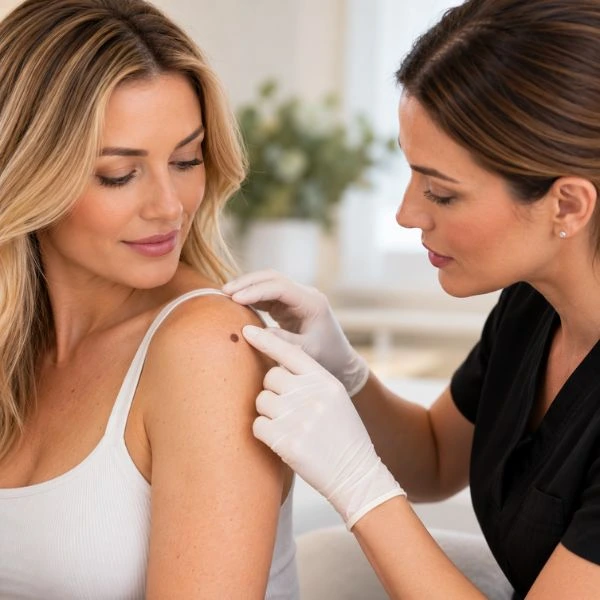
Moles are common skin growths that can appear anywhere on the body. Most are harmless, but changes in their appearance can sometimes indicate a condition that requires medical attention.
Some people consider having a mole removed for cosmetic reasons, particularly if it is in a noticeable location or catches on clothing.
At Lipo Sculpt, we recognise the importance of a proper skin assessment before considering any cosmetic procedure.
Not every mole is suitable for cosmetic removal, and you should not assume a mole is benign based on appearance alone.
If you are considering mole removal, understanding the available options and when medical assessment is necessary is an important first step.
Benign Mole removal Buckingham

Start with a conversation.

Understand your options before deciding on treatment.

Consultation first

Time to discuss suitability and ask questions.

A plan around you

Treatment options explained for your circumstances.

Convenient home visits

Subject to treatment and local availability.

What Is a Benign Mole Buckingham?

A mole, also known as a melanocytic naevus, is a skin growth made up of pigment-producing cells called melanocytes.
Moles can vary in appearance and may be:
  • Flat or raised.
  • Light brown, dark brown, pink or similar in colour to the surrounding skin.
  • Round or oval.
  • Smooth or slightly textured.
  • Present from birth or develop later in life.
Many people develop moles during childhood and early adulthood.
Although most moles are harmless, appearance alone cannot reliably establish whether a lesion is benign.
A healthcare professional may need to examine a mole and, in some circumstances, arrange further investigation.

When Should a Mole Be Checked?

Explore the treatment information below. The right option depends on your concerns, medical history and an individual assessment.


Most moles are harmless, but don’t ignore changes in their appearance or symptoms.

Knowing which changes to look for can help you decide when to seek medical advice. If you are concerned about a mole, contact your GP rather than arranging cosmetic treatment.

Benign Mole removal Buckingham

Home-Based Benign Mole Removal Buckingham

Lipo Sculpt offers home appointments for the cosmetic removal of previously diagnosed benign moles in participating UK locations.

Before any treatment is arranged, the previous diagnosis, the mole’s characteristics and its suitability for the proposed procedure must be considered.

Not every benign mole is suitable for cryotherapy. A previous diagnosis does not remove the need to consider changes in the mole’s appearance, potential risks or whether further medical assessment is necessary.

If a mole has changed in size, shape or colour, becomes painful, itchy or starts bleeding, you should contact your GP before considering cosmetic removal.

Where a mole requires further investigation or tissue examination, destructive cosmetic treatment should not proceed.

Your treatment journey

Is CryoPen Suitable for Mole Removal?
CryoPen is a cryotherapy device that delivers controlled cooling to selected skin lesions.
Cryotherapy may be used for certain appropriately identified benign skin conditions. However, it is not suitable for all lesion types.
CryoPen should not be regarded as a routine treatment for pigmented melanocytic moles.
If a lesion’s diagnosis is uncertain, or if tissue examination may be necessary, do not proceed with destructive cosmetic treatment.
Deciding whether cryotherapy is appropriate must take into account the lesion, relevant clinical guidance, practitioner competence, and diagnostic requirements.
At Lipo Sculpt, we consider skin lesion enquiries individually and recommend medical assessment where appropriate.

A considered approach

Why Is Assessment Important Before Mole Removal?
A mole that appears harmless may occasionally require further investigation.
Some skin cancers can resemble benign lesions, so appropriate assessment is especially important.
Removing or destroying a lesion without establishing whether it requires investigation may delay diagnosis or prevent tissue from being examined.
For this reason, cosmetic treatment should not replace medical assessment.
If a lesion is new, changing, symptomatic, or diagnostically uncertain, an appropriate healthcare professional should assess it before cosmetic removal.
What Are the Potential Risks of Mole Removal?
All mole removal procedures have potential risks, even when performed for cosmetic reasons.
Depending on the method used, these may include:
  • Pain or discomfort.
  • Redness, swelling or tenderness.
  • Bleeding or infection.
  • Scarring.
  • Changes in skin pigmentation.
  • Incomplete removal or recurrence.
  • An unsatisfactory cosmetic outcome.
The likelihood and nature of these risks depend on the procedure, the individual and the treatment area.
No mole removal method can guarantee a scar-free result.
Any proposed procedure should be discussed with an appropriately qualified professional, including its potential benefits, risks and alternatives.
What If a Mole Is Not Suitable for Cosmetic Treatment?
If a mole has concerning features or its diagnosis is uncertain, medical assessment may be necessary.
Your GP can examine the area and determine whether specialist referral is appropriate.
A dermatologist or another appropriately qualified healthcare professional may recommend monitoring, further examination, biopsy or removal, depending on the findings.
Do not delay medical assessment because of an interest in cosmetic treatment.

Your questions, answered

Frequently Asked Questions About Benign Mole Removal

These answers offer a starting point. Your consultation provides information specific to the treatment and your circumstances.

No. Most moles are benign, but some skin changes can indicate melanoma or another condition requiring medical attention. Do not assume a mole is harmless without appropriate assessment when there are concerning features.
No. CryoPen is not appropriate for every skin lesion and should not be considered a routine method for removing pigmented melanocytic moles. Some lesions require medical investigation or removal using a method that preserves tissue for examination.
Some benign moles can be removed for cosmetic reasons following appropriate assessment. The recommended method depends on the lesion and individual circumstances.
Not necessarily. Discomfort varies depending on the procedure, treatment area and individual sensitivity. Some methods may involve local anaesthetic.
Scarring is possible with any mole removal method. Scar appearance depends on several factors, including the procedure, location, and individual healing response.
Some moles may recur, particularly if mole cells remain after a procedure. Recurrence or changes at a previously treated site should be medically assessed.
Contact your GP if a mole changes in size, shape or colour, becomes painful or itchy, bleeds, develops crusting or otherwise causes concern.
Costs depend on the provider, assessment requirements and removal method. If cosmetic removal is considered appropriate, the provider should explain the applicable charges, including consultation, treatment and any additional costs, before you agree to proceed.

Let's talk about your options

Concerned About a Mole?

If a mole is new, changing, bleeding, itchy or otherwise unusual, arrange an assessment with your GP before considering cosmetic removal.

For general information about Lipo Sculpt’s available skin lesion treatments, you can contact our team.

Information on this page is intended for general guidance and does not replace medical diagnosis, examination or treatment.